
Last updated November 25, 2026
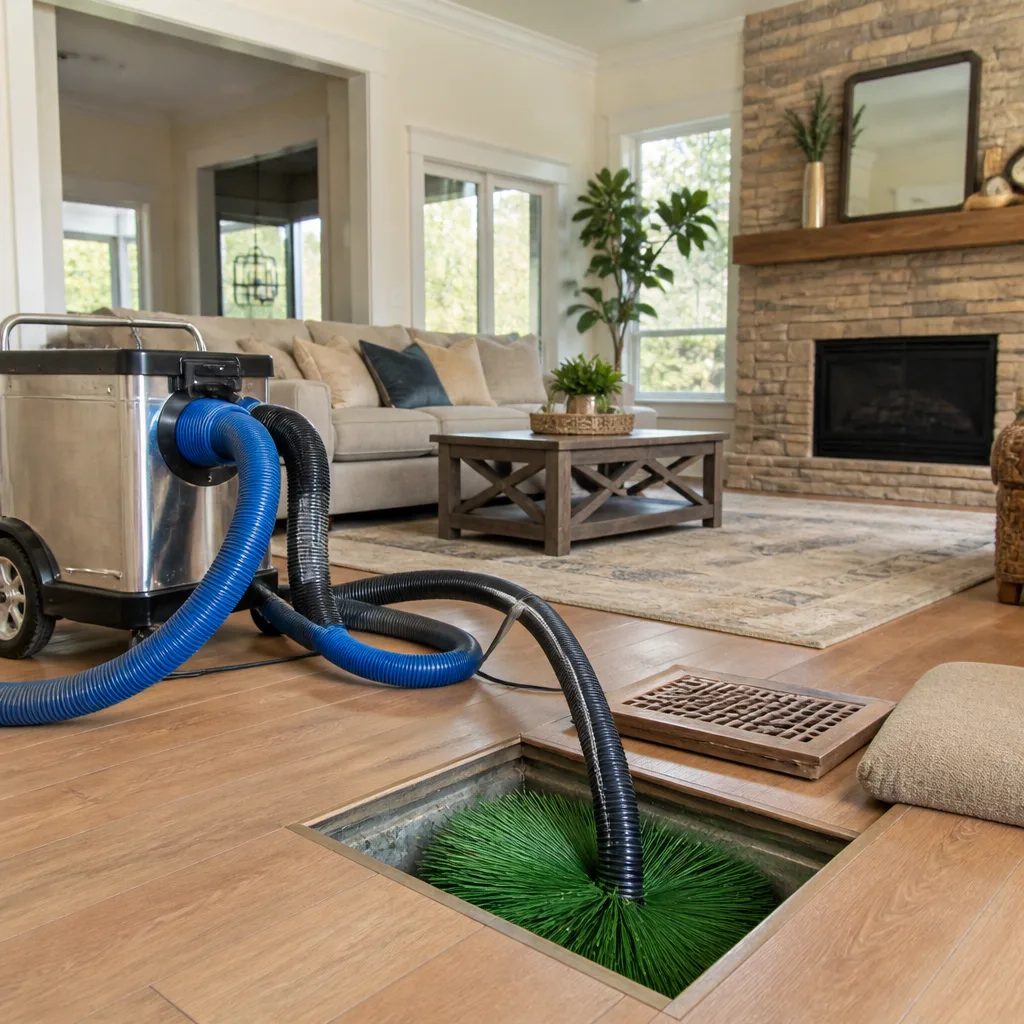 Whole-home duct cleaning
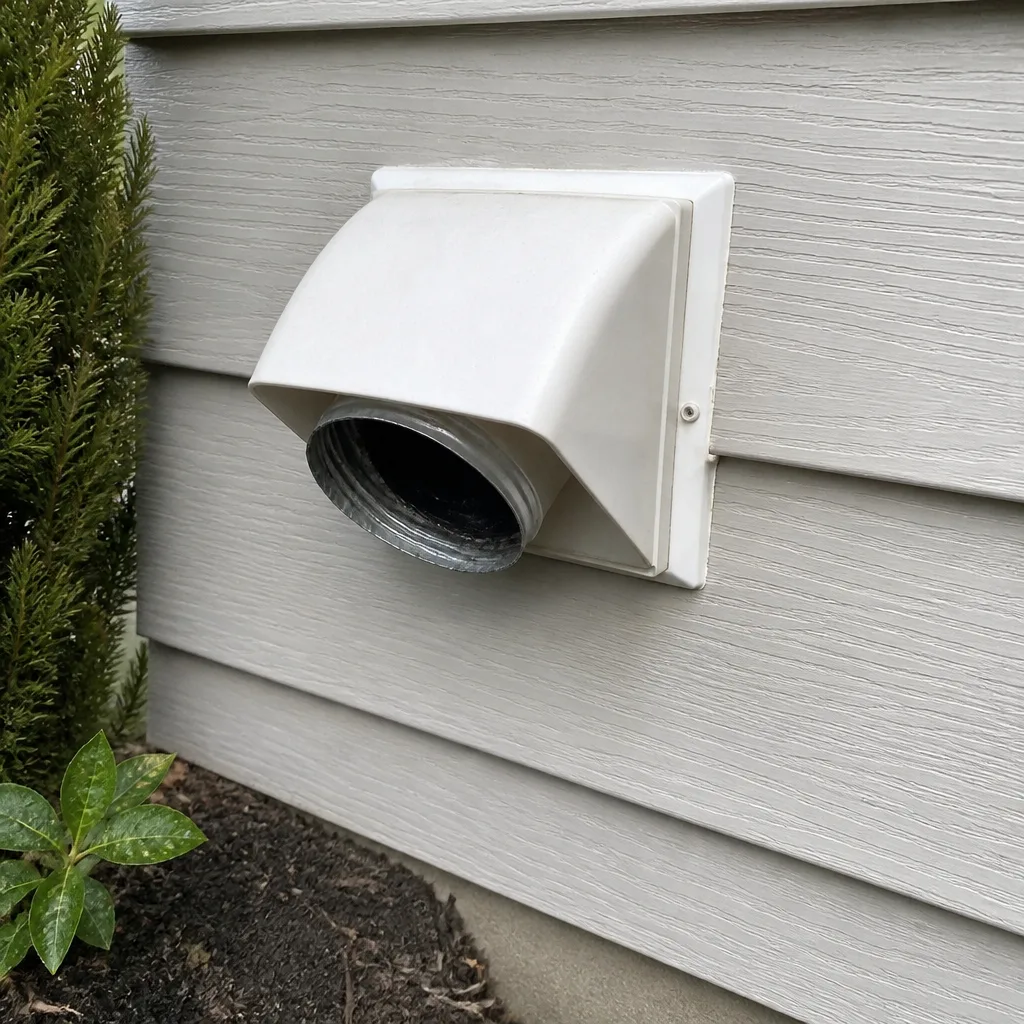 Dryer vent cleaning
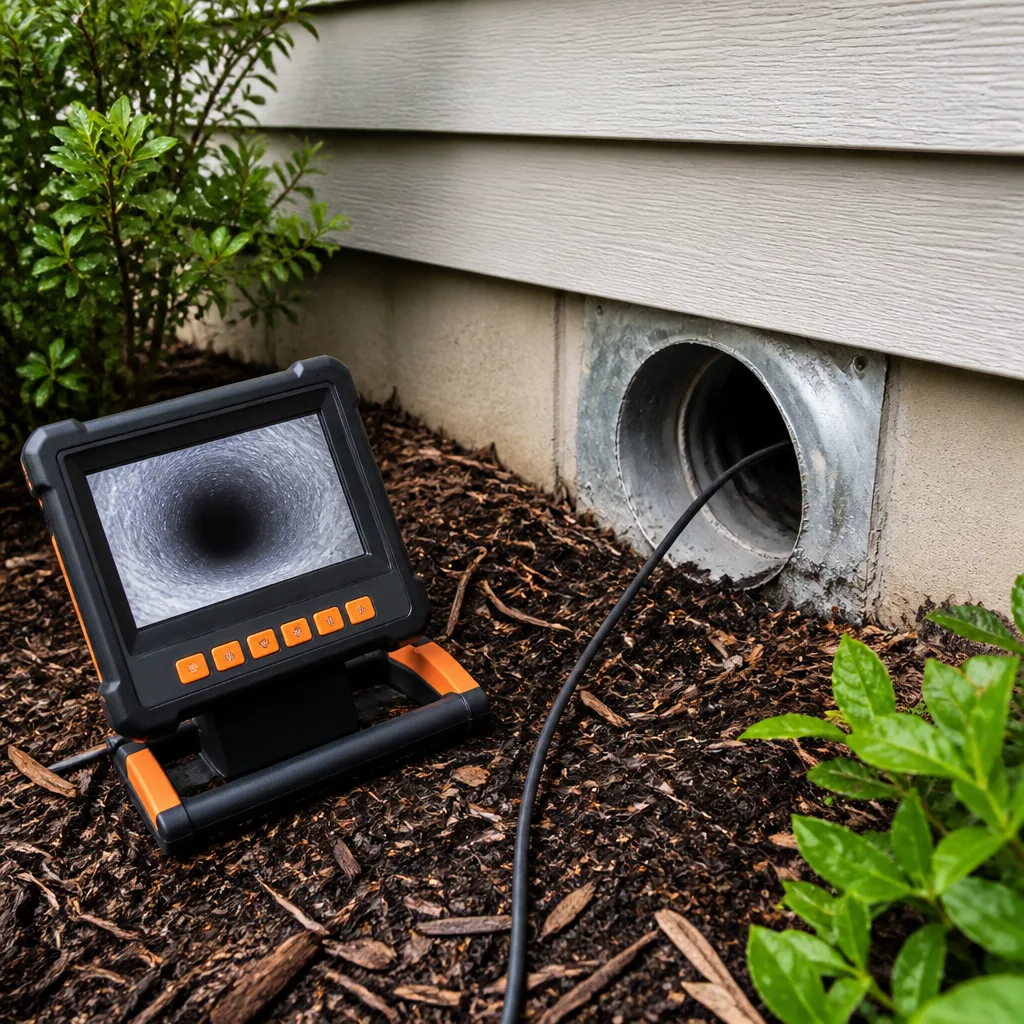 Camera inspection
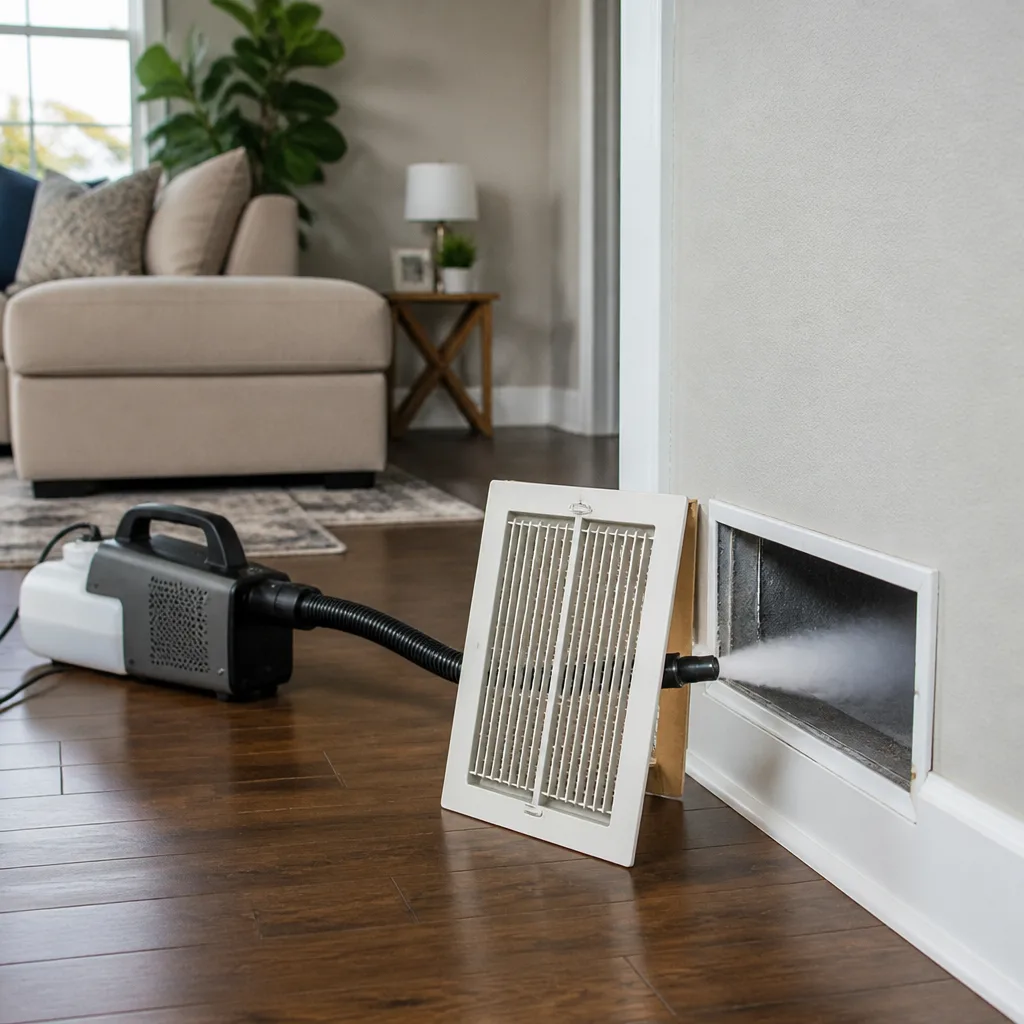 Sanitizing & deodorizing
Whole-system duct and dryer vent check with before-and-after photos - you see exactly what came out of your vents
That "$99 whole-house special" is a bait ad - the real number appears once they are in your hallway, or the "clean" is a shop-vac at the register. We photograph the inside of your ducts before and after instead.
Air Duct Cleaning Emergency Preparedness Guide for Torresdale Homes
Most homeowners treat the HVAC system as the first tool for clearing smoke or damp air after a fire, a flood, or a major renovation. That instinct is backwards. In a Torresdale home, a burned kitchen or a flooded basement turns the ductwork into a closed-loop distribution network for soot, char fragments, and mold spores, and running the blower to “air things out” pushes that load into every room. What follows is what to do in the first 24 to 72 hours, why smoke and flood water demand different cleaning chemistry and process than routine dust, how to document system condition for an insurance claim, and what containment-level duct remediation actually involves. You’ll also learn when a standard cleaning won’t do the job.
Quick Answer
After a fire, flood, or large construction-dust event in a Torresdale home, shut the HVAC system off, keep it off, and call for professional inspection before running it again. Standard cleaning usually is not enough: smoke, soot, and flood-borne mold require containment, HEPA filtration, and verification testing. Professional inspection also gives you the documented condition report most adjusters want to see on a claim.
Styles & brands we work with
- Whole-home duct cleaning
- Dryer vent cleaning
- Camera inspection
- Sanitizing & deodorizing
Table of Contents
- Why You Should Shut the HVAC Down Immediately
- How Smoke and Soot Behave Inside Ducts
- The Mold Timeline in Flood-Affected Ducts
- Documenting Duct Condition for Insurance
- Emergency Duct Cleaning vs. Standard Cleaning
- Your First 72 Hours: A Step-by-Step Plan
- Preparing Your Torresdale Home Before the Emergency
- Common Mistakes to Avoid
Why You Should Shut the HVAC Down Immediately
The moment the thermostat calls for heat or cooling, the blower pulls air through the return ducts and pushes it out through every supply register in the house. If the return is sitting near smoke residue or a flooded basement, you are circulating that load room by room. The system doesn’t filter out what it picks up: it spreads it.
What goes wrong when the system keeps running:
- Soot travels farther than it would settle. Fine particles that would have stayed in one room get distributed through supply runs that may reach twelve or more registers.
- Wet interior surfaces stay wet longer. A flood-damp duct lining that gets constant airflow stays in the humidity range where mold colonizes rather than drying out.
- The furnace or air handler can pull debris into components. Smoke residue on a heat exchanger surface and char fragments on a blower wheel are harder to remove than air-surface deposits.
- You lose the clean reference point. Documentation of what was contaminated the day of the event becomes harder to establish the longer the system runs.
Torresdale has a lot of rowhouses and older single-family homes with uninsulated sheet-metal trunk lines and kneewall returns. Those duct runs can be long and irregular, which means a system that’s left on can deposit soot in places that a visual inspection from a register won’t reveal. The right move is to set the thermostat to off, tape a note over it so no one turns it back on, and call for inspection. If you suspect the air handler itself is contaminated, don’t run fan-only mode either. The same reasoning applies to a kitchen fire that has charred the filter grille in a hallway return. Every circuit a particle travels is another surface to clean. Calmly shutting down the system protects the scope of the job.
How Smoke and Soot Behave Inside Ducts (and Why They Need Different Chemistry)
Smoke residue is not the same material as household dust and it is not the same as visible ash. Soot consists of very fine carbon particles with a slightly oily film that clings to galvanized steel and to flex-duct liners. It also carries an odor load that a simple vacuum pass cannot remove from the surface it contacts.
Three specific ways soot behaves differently:
- It plates onto surfaces. The oily component bonds to duct walls, blower wheels, and register louvers. Vacuum alone lifts some of it but leaves a thin layer that re-releases odor when the system is turned back on.
- It penetrates flex duct completely. Flexible duct has a corrugated interior that traps particles in every rib. Several runs of flex are often replaced rather than cleaned, and a professional inspection decides which is which.
- It carries odor into the airstream. The carbon particles themselves don’t smell, but the oily carrier does. Cleaning chemistry that dissolves that film is different from the food-grade surfactant used in a routine duct cleaning.
This is where professional equipment matters. Some smoke jobs call for a deodorizing or sanitizing step after mechanical cleaning, and the choice of product depends on the substrate and what the ducts are made of. Air Duct Cleaning Torresdale uses Rotobrush and Nikro systems that agitate and extract residues inside the duct run rather than just vacuuming the surface. In heavy smoke situations, Abatement Technologies air filtration equipment on hand allows containment-level capture while cleaning is underway. The point isn’t the brand name; it’s that a shop-vac and a blower are not the right answer for soot.
The Mold Timeline in Flood-Affected Ducts
Mold requires moisture, organic material, and time. Flood water that has entered a basement can reach return air plenums, floor registers, or the interior insulation of an air handler. Once a porous surface in the duct system stays damp, the clock starts.
The rough shape of that window looks like this:
- First 24 hours. Surfaces are damp but colonization is unlikely to be visible. This is the window when drying and assessment are most valuable.
- 24 to 48 hours. Condensation and residual moisture begin to support the conditions mold needs. The air handler cabinet and flexible duct sections are the most vulnerable.
- 48 to 72 hours. Visible growth can start on wet porous materials in the right humidity and warmth. Once growth establishes on duct liner or on the interior of flex duct, replacement rather than cleaning is often the practical answer.
- Beyond 72 hours. A damp system that has been running and spreading spores affects not just the ducts but everything they serve. Remediation scope grows accordingly.
Torresdale homes with basement returns and older air handlers are more exposed here, because the lower return is the one that sits closest to a flood event. The 24 to 72 hour window is worth acting on even if there is no visible growth yet. A professional inspection with moisture readings tells you whether the ducts dried in time or whether a section needs removing. That determination is not one to make by smelling a register. The same window matters after a slow leak or a failed water heater, not only an obvious basement flood. Getting a professional in early protects the salvageable parts of the system and gives you a defensible record of what was wet and when.
Documenting Duct Condition for Insurance Claims
Adjusters working a smoke or water loss in a Torresdale residence usually want evidence that the duct system was affected and that the cleaning or replacement was necessary. A photograph of a gray supply register is not enough. What supports a claim is a professional inspection record tied to the loss.
What a useful duct-system condition report contains:
- Photographs inside the duct run at multiple points, not just at the register face, showing visible residue, standing moisture, or growth.
- Type and material notes for each accessed run: galvanized, flex, duct board, or lined sheet metal. Replacement cost depends on this.
- Moisture readings from the air handler and return plenum, taken with a meter rather than a visual guess.
- An inventory of affected components: registers, grilles, blower wheel, coils, filter rack.
- Before and after photos of the cleaning itself, which we take on every job so the homeowner has proof the work was done, not just claimed.
That last item matters for the claim response, not only the initial filing. An adjuster processing a supplemental invoice wants to see that the scope of work actually occurred. A written record with dated photos does more than a verbal description. If you are already working with an adjuster, ask what format they prefer before the inspection. We can work with your insurer’s process and provide the documentation in the standard the claim requires. What we don’t do is promise to change what a policy covers. The documentation has to stand on its own, and it usually does when the condition is captured clearly at the time of inspection.
Emergency Duct Cleaning vs. Standard Cleaning
A routine air duct cleaning and a post-emergency remediation are not the same job with a tighter schedule. They differ in containment, protective equipment, filtration during the work, and how completion is verified.
| Element | Standard cleaning | Post-emergency response |
|---|---|---|
| Containment | Register-level dust control | Sealed work zones and negative-pressure capture with Abatement Technologies filtration |
| Protective equipment | Standard work gear | Respiratory protection appropriate to smoke, biological, or chemical exposure |
| Cleaning chemistry | Standard surfactant | Soot-specific cleaners, sanitizing step, and deodorizing where warranted |
| Extraction method | Rotobrush and Nikro agitation and vacuum on every run | Same equipment, plus HEPA filtration for airborne residue |
| Verification | Visual confirmation with before and after photos | Photos plus a documented condition record and, where needed, air sampling coordination |
| Scope decisions | Clean what’s dirty | Clean, seal, or replace component by component with the report to back it up |
The reason post-emergency work is a separate protocol is containment. In a smoke remediation, you don’t want residue leaving the duct run and landing in a bedroom you just cleaned. In a mold remediation, you don’t want spores crossing from an affected area to an unaffected one. Rotobrush and Nikro are the systems we use on both kinds of jobs, because they agitate and extract residues inside the duct rather than just vacuuming the register face. The difference on an emergency job is what surrounds the work and how the completion is verified.
Your First 72 Hours: A Step-by-Step Plan
Here is the sequence we recommend for a Torresdale homeowner facing a smoke, flood, or major construction-dust event.
- Turn the HVAC off and leave it off. Tape a note on the thermostat. Do not run fan-only mode as a workaround.
- Take your own photos before anything moves. Register faces, air handler, any visible soot or water line, and the date. This establishes the pre-cleaning condition.
- Address the source, not the ducts. Work with your restoration or remediation contractor to dry the structure and stop the smoke source first. Duct cleaning comes after the building envelope is stabilized, not before.
- Call for a duct system inspection. The best first window is inside 24 hours for flood losses and inside the first few days for smoke losses. Inspection tells you whether the system needs cleaning, sealing, replacement, or some combination.
- Get the written report before remediation starts. That document supports the claim and sets the scope of work.
- Complete remediation with containment and verification. No cleanup should be considered done until before and after photos show the duct run.
- Consider sealing and filtration after the cleaning. A duct system that has just suffered a loss is a good time to address leaks and filtration with a product like Honeywell or Aprilaire, but only after the ducts are clean.
The single biggest mistake we see in the first 72 hours is sequencing. Homeowners call for cleaning before the structure has dried, or run the system to see if the smell resolves. Both stretch the job. Drying first, then cleaning, then sealing gets you to a usable system once, without a second visit.
Preparing Your Torresdale Home Before the Emergency
The best time to think about post-emergency duct response is before the fire or the flood. What you do now determines how quickly you can act later.
- Know where the thermostat and air handler are, and know how to shut the system down. Every adult in the house should be able to kill power to the HVAC.
- Keep a photo set of the duct system and registers in your phone. A dated baseline makes a loss claim sharper.
- Read your homeowner’s policy language on water damage and smoke loss. Coverage of duct remediation varies, and knowing what’s covered before an event keeps you from being caught off guard.
- Get routine duct cleaning done on a sensible schedule. A system that’s already been cleaned has less baseline dust and residue to complicate an emergency response.
- Address known leaks and gaps now. Duct repair and sealing reduces the paths contaminants can travel in a loss event, and it lowers the number of surfaces to remediate later.
Torresdale’s housing stock varies from older stone-front homes near the Delaware to newer rowhouse blocks, and the duct system in each is different. A baseline inspection now makes the emergency response faster when it matters. If your ducts have never been cleaned, start with air duct cleaning and a written condition report. If you’ve had water in the basement before, ask about the return air path specifically. And if the system has visible leaks or disconnected runs, address those with air duct cleaning recommendations first rather than waiting for a loss event to expose them. You’ll also want the dryer vent in order; a clogged vent is a fire risk that adds to the emergency list you’re trying to prevent. If a fire does occur, dryer vent cleaning should be part of the post-event response, since smoke residue passes through the vent line. And once the ducts are clean, a full HVAC cleaning covers the components the ducts connect to, so the whole system comes back clean rather than just the runs.
Common Mistakes to Avoid
- Running the HVAC to “air out” the house. This is the mistake that turns a contained smoke loss into a whole-house residue problem, and it happens most often in the first few hours when anxiety is highest.
- Calling for cleaning before drying. In a flood loss, cleaning wet ducts wastes the visit. Dry the structure first, then clean.
- Accepting a verbal scope of work. Adjusters and homeowners both need a written record. Get the report in writing before the work starts.
- Choosing a low bid for a post-emergency job. A subcontractor with a shop vac can move dust around; containment and HEPA filtration are what actually make a post-emergency job complete.
- Skipping the air handler and blower wheel. Cleaning the ducts but leaving soot on the blower wheel means the system re-contaminates itself on first start-up.
- Not documenting at the time of the loss. Photos taken a week later don’t carry the same weight with an adjuster.
- Treating the job as done at the register face. Before and after photos inside the run are the only proof the work happened.
See the difference
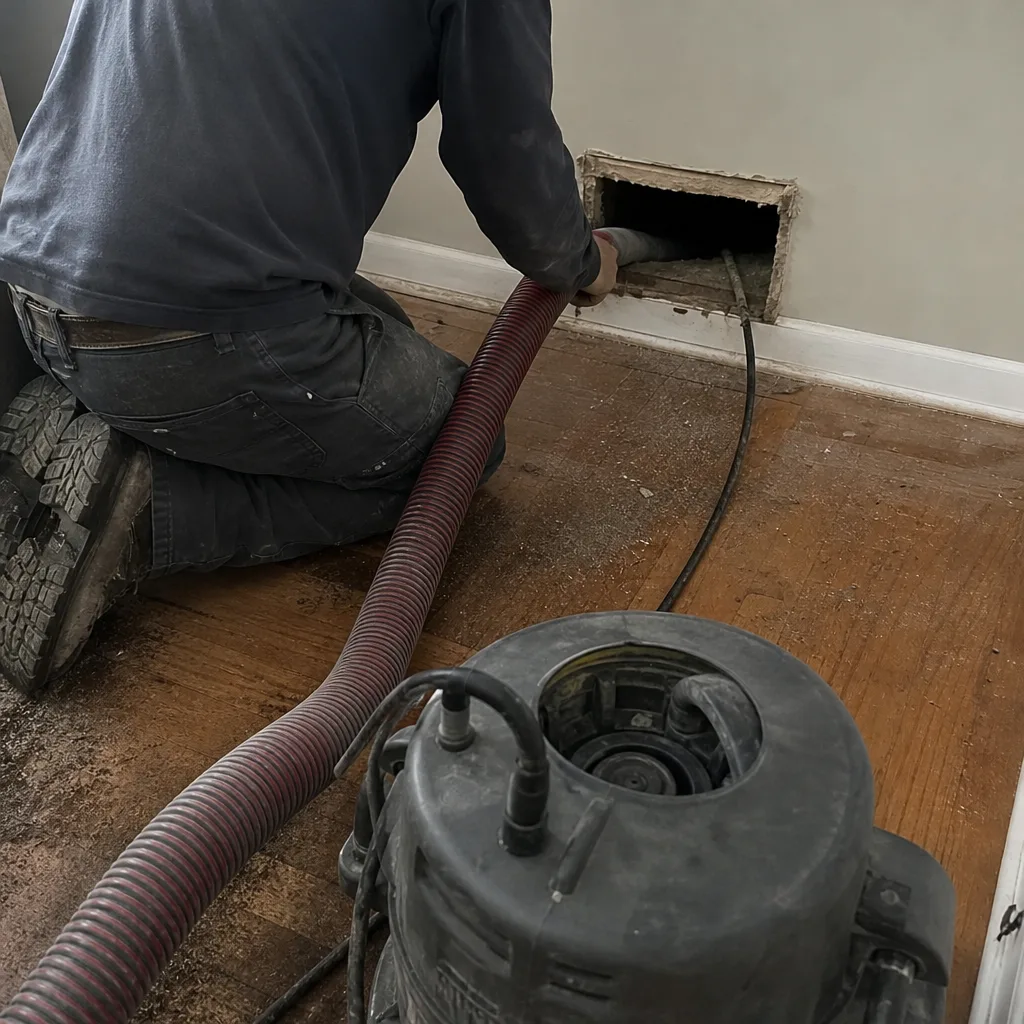 Before
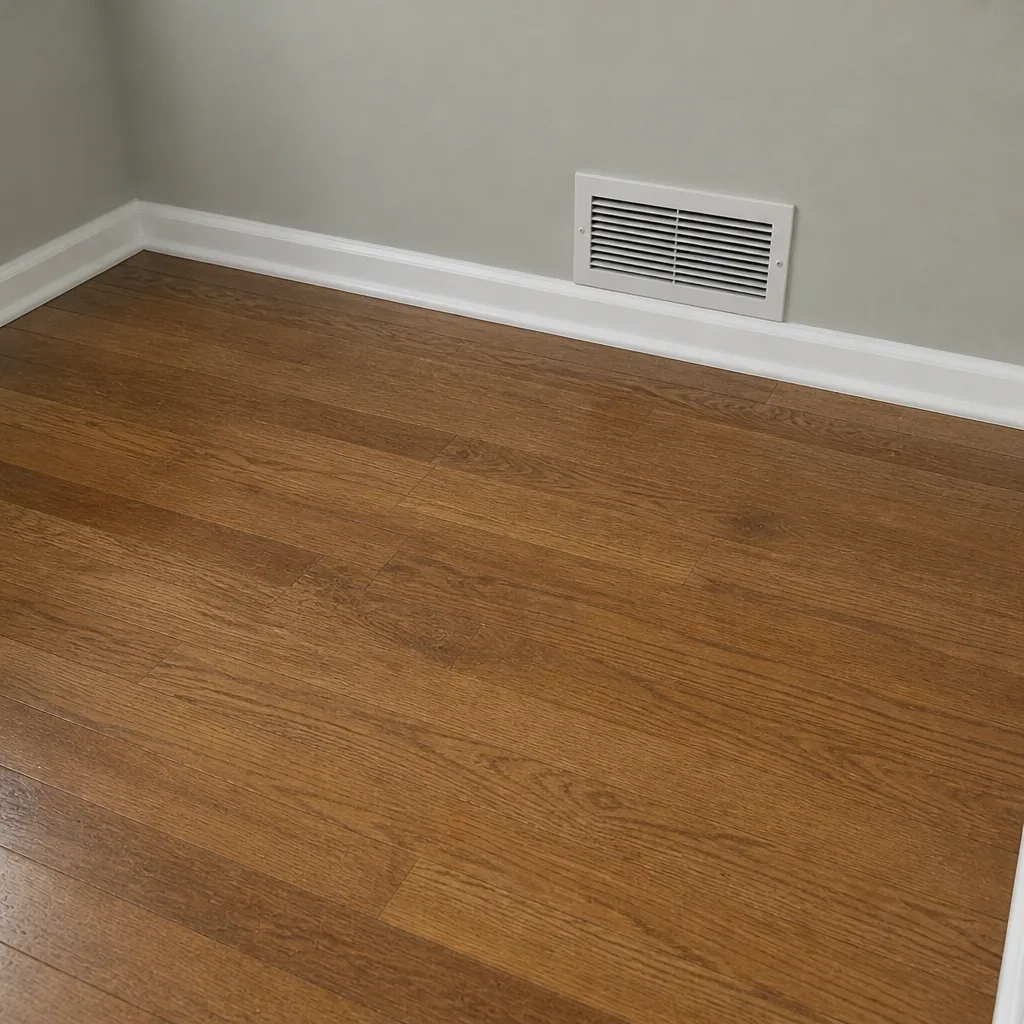 After
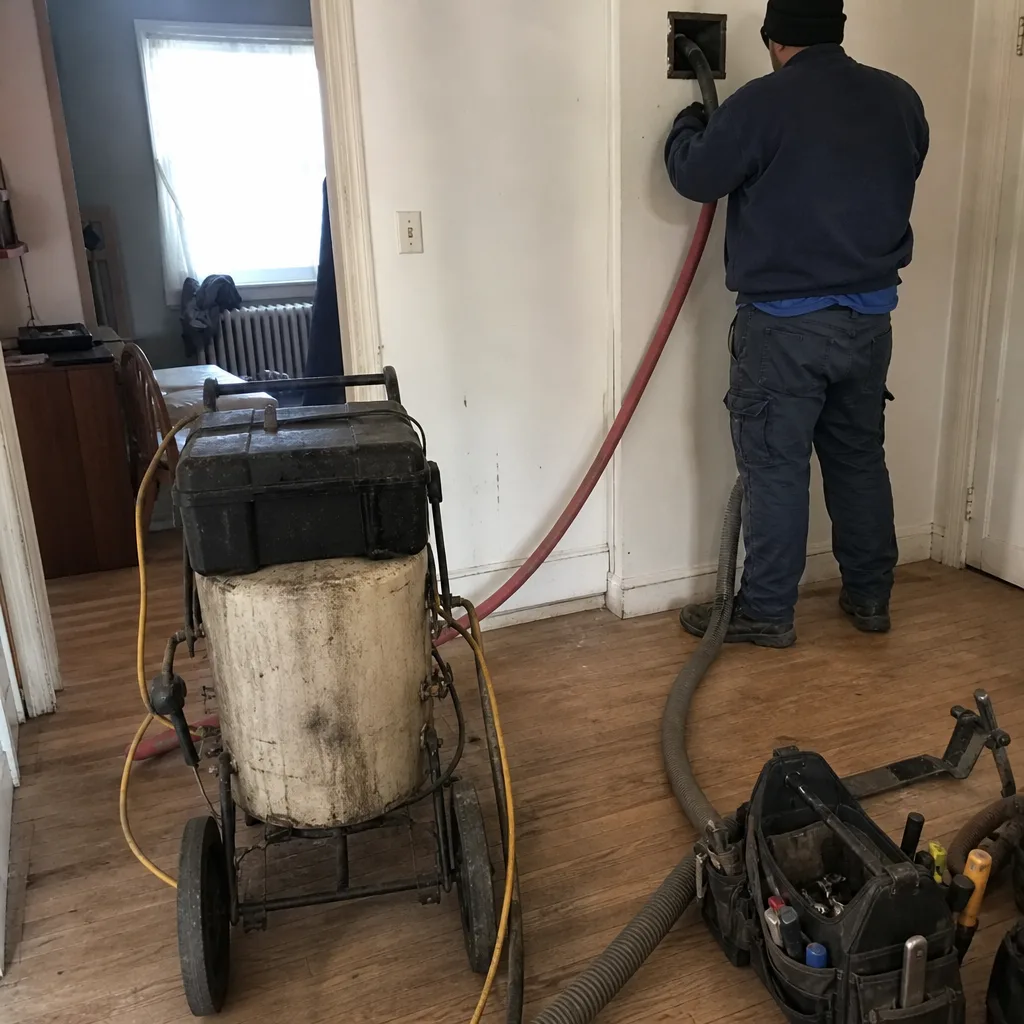 Before
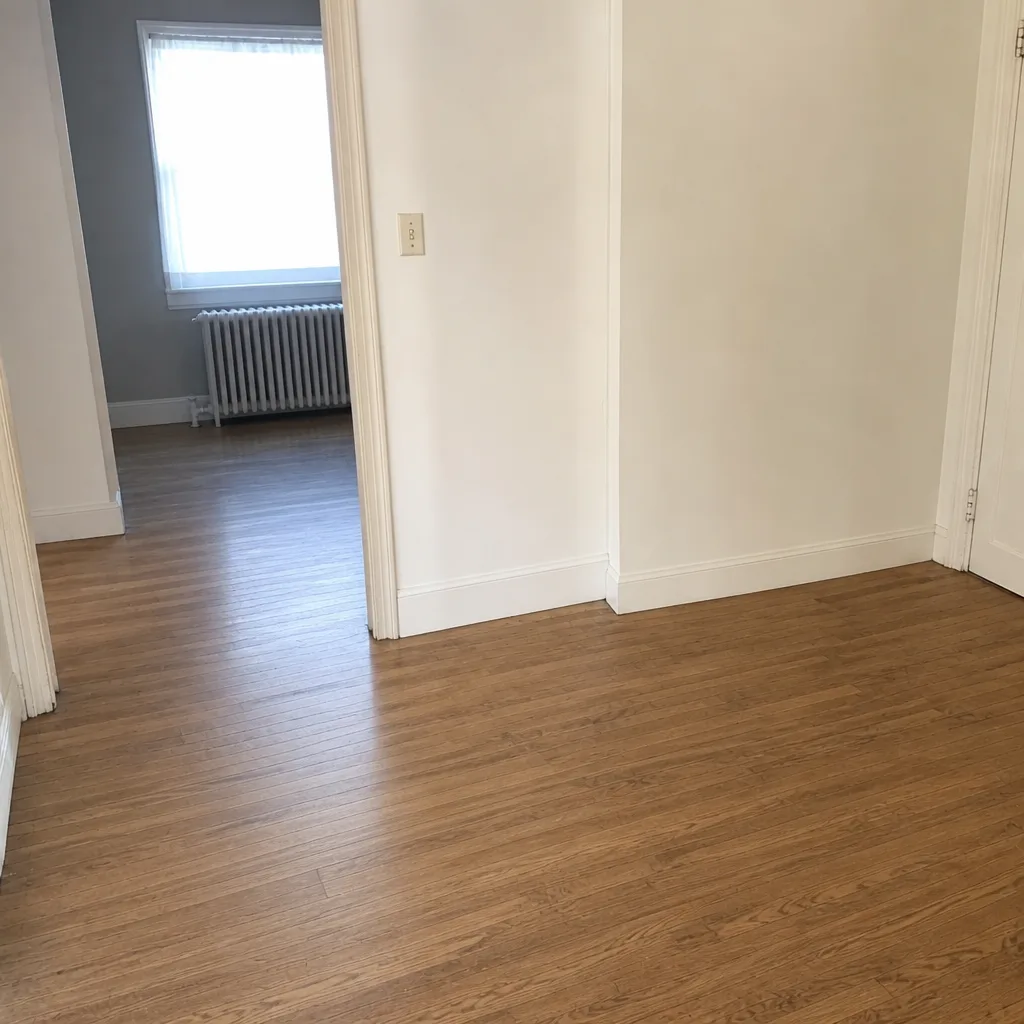 After
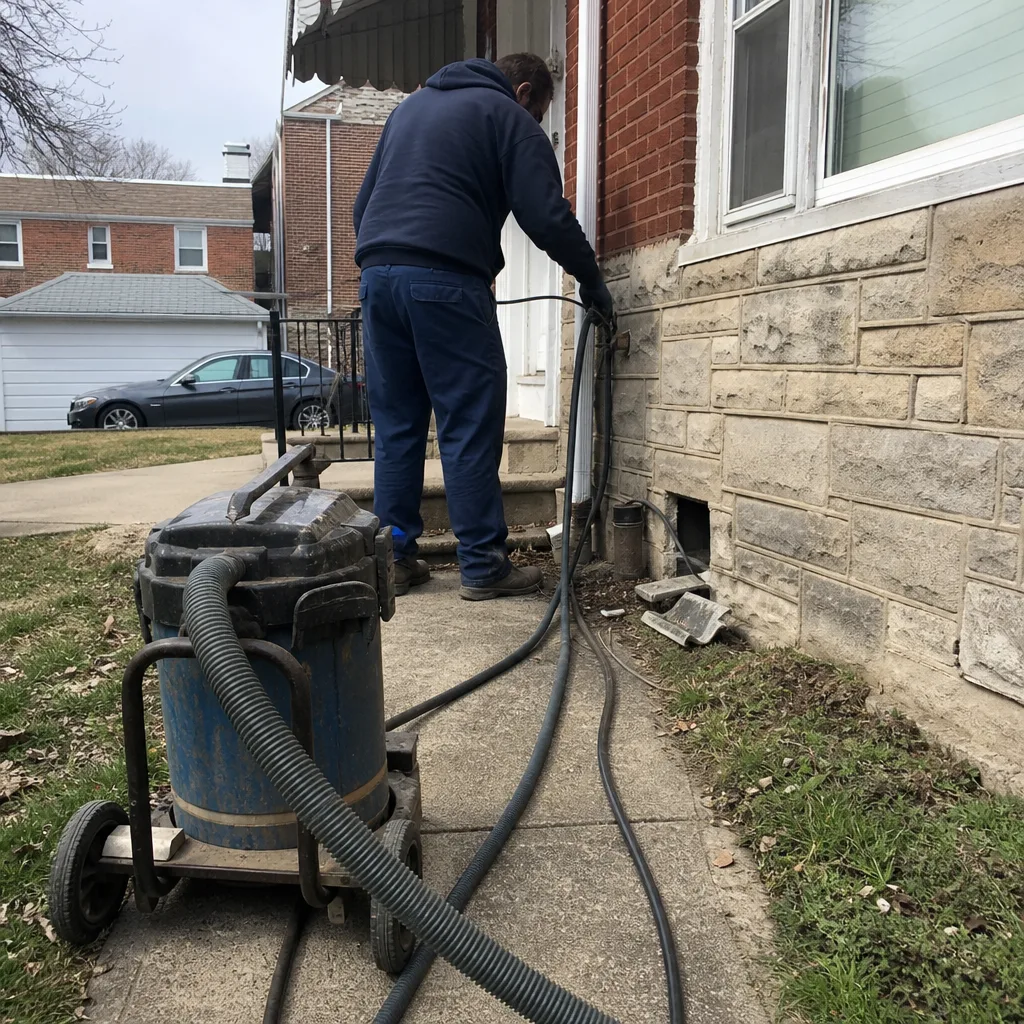 Before
 After
When to Call a Professional
Call for professional inspection when any of these is true: a fire, even a small kitchen fire, has produced smoke in the home; the basement or a supply run has taken on water; a large renovation has produced visible dust through the registers; there is a persistent musty smell after a water event; or the HVAC has been running in a space with visible smoke or damp for more than a few hours. In each case, professional inspection defines the scope before the mistake of running the system again can compound it. Call (833) 482-6614. We answer 24/7. Fast dispatch from 7am to 7pm, Sunday through Friday. Air Duct Cleaning Torresdale offers free estimates and a written scope on inspection, and we can provide the documentation your insurer needs on the claim.
Frequently Asked Questions
No. Running the system after a fire will pull soot into the supply runs and spread it through the home. Turn the thermostat off, tape a note on it, and call for professional inspection before the system runs again. Call (833) 482-6614 for an exact quote on inspection and cleaning. Estimates are free.
Visible mold can start appearing on damp porous duct surfaces within about 48 to 72 hours if moisture remains. That’s why professional inspection inside the first 24 hours after a flood event is worth scheduling, before the growth window closes. Call (833) 482-6614 to book an inspection.
Coverage depends on your policy and the cause of loss, so there’s no single answer. What helps the claim is a professional inspection report with dated photos of the duct interior, moisture readings, and a written scope of work. We can work with your insurer and provide that documentation. Call (833) 482-6614 for a free estimate.
Emergency response adds containment, respiratory protection, soot-specific cleaning chemistry, HEPA filtration during the work, and verification of completion. Standard cleaning focuses on mechanical agitation and extraction. Both use professional equipment, but the surrounding protocol is different. Call (833) 482-6614 for an exact quote after inspection.
Wait until a professional has inspected the system and confirmed the ducts and air handler are dry. Running wet ducts spreads moisture through the house and shortens the mold window. Call (833) 482-6614 to schedule the inspection.
Not always. Galvanized runs usually clean up well with the right equipment and chemistry. Flex duct that has absorbed soot or moisture, or duct board with visible growth, is often replaced rather than cleaned. The inspection decides. Call (833) 482-6614 for a free estimate on the scope.
The Bottom Line
Post-emergency duct response is a sequence, not a single cleaning. Shut the HVAC down first. Take your own photos. Dry the structure. Get a professional inspection with a written report in hand before remediation starts. Complete the work with containment, filtration, and verification, and keep the before and after photos for the claim. Once the ducts are clean, sealing and filtration with a Honeywell or Aprilaire product protects the clean system going forward. The right equipment for the specific situation at hand, from Rotobrush and Nikro agitation inside the run to Abatement Technologies containment while the job is underway, is what makes the difference between a cleaning that holds and one that doesn’t. If your Torresdale home has been through a fire, a flood, or a major dust event, the phone line is open 24/7 and the estimate is free.
Call (833) 482-6614 for a free estimate from Air Duct Cleaning Torresdale. We answer 24/7. Fast dispatch from 7am to 7pm, Sunday through Friday. Start with the inspection, and we’ll show you what we find.
Written by the team at Air Duct Cleaning Torresdale.