
Last updated November 25, 2026
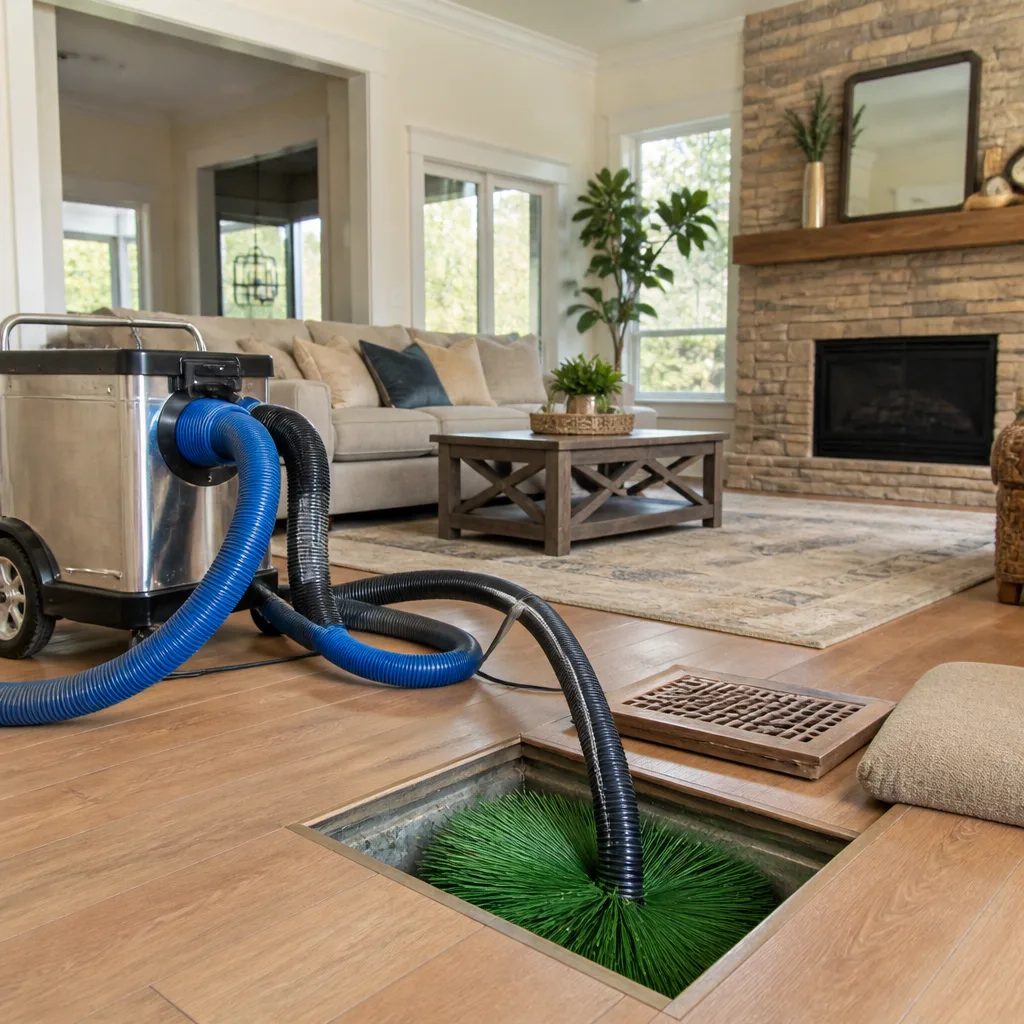 Whole-home duct cleaning
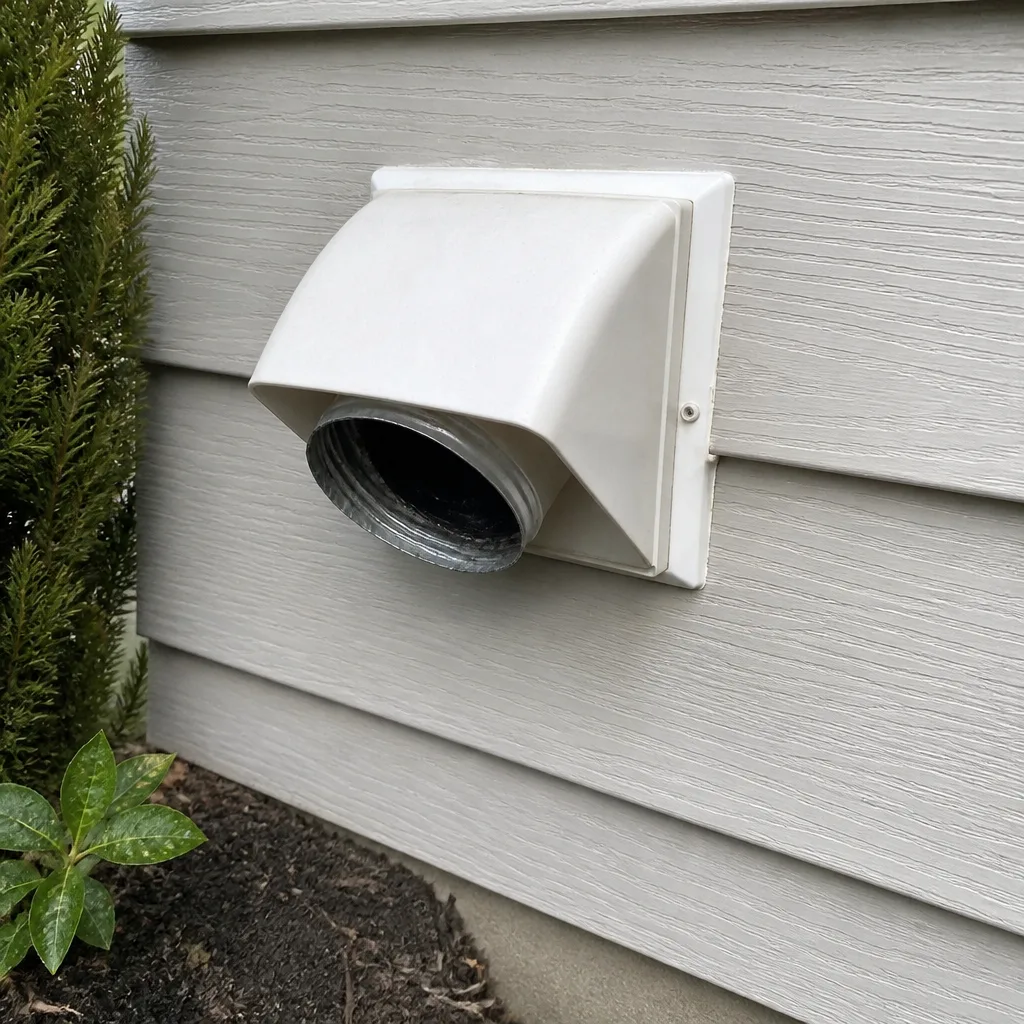 Dryer vent cleaning
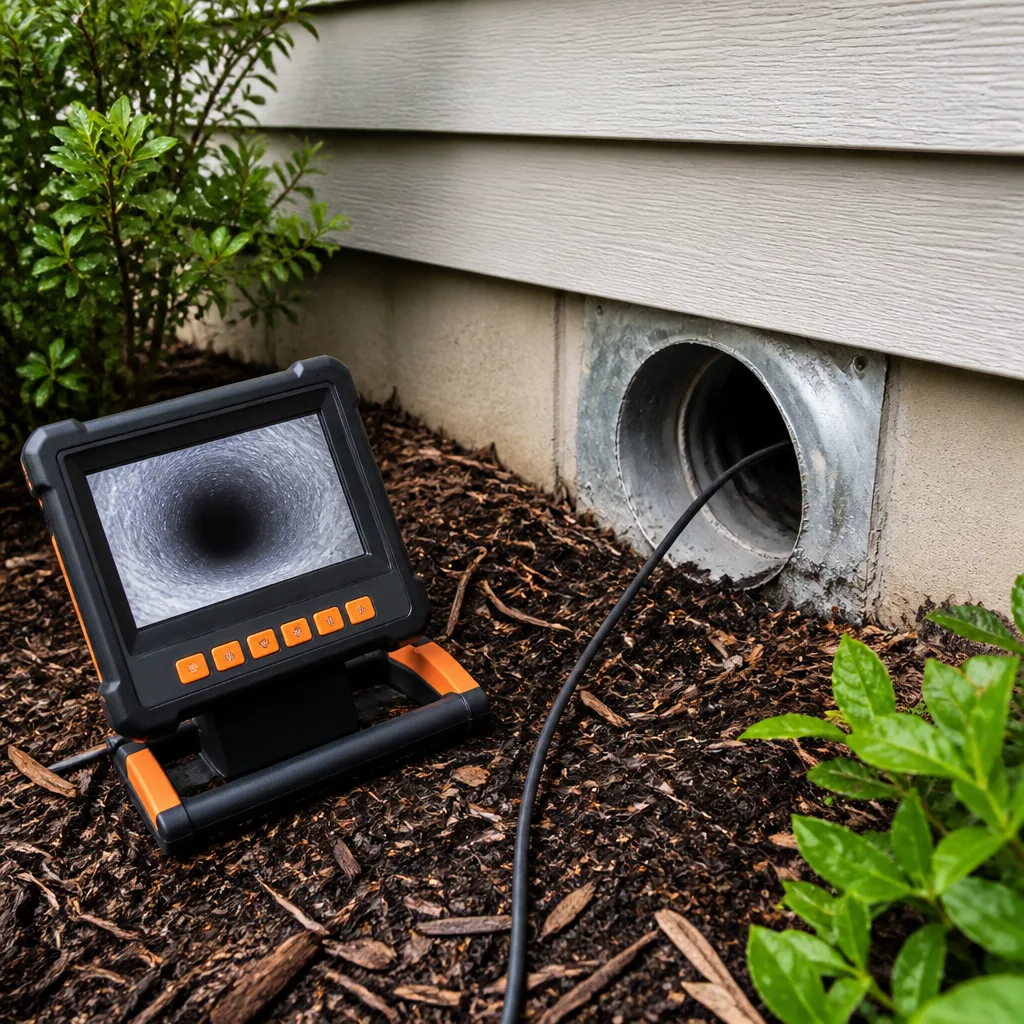 Camera inspection
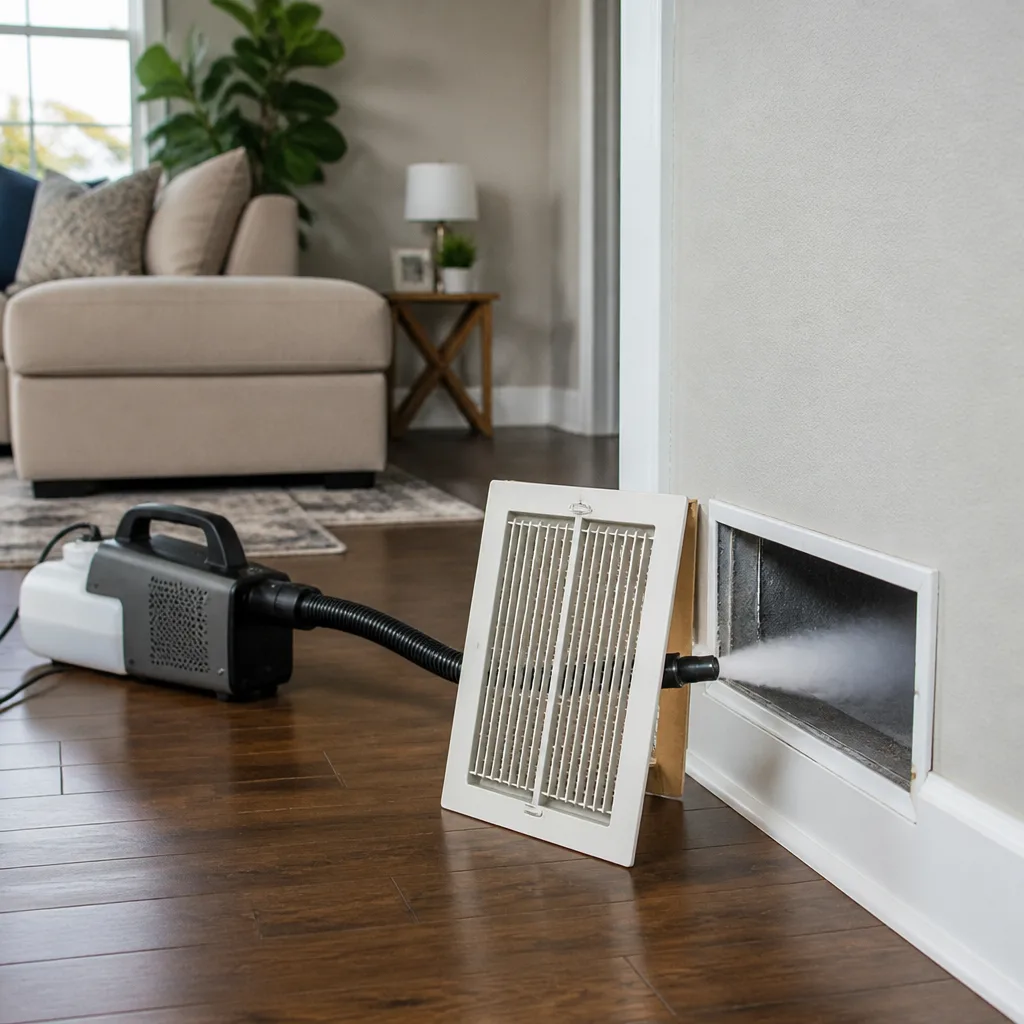 Sanitizing & deodorizing
Whole-system duct and dryer vent check with before-and-after photos - you see exactly what came out of your vents
That "$99 whole-house special" is a bait ad - the real number appears once they are in your hallway, or the "clean" is a shop-vac at the register. We photograph the inside of your ducts before and after instead.
DIY vs Professional Air Duct Cleaning: The Torresdale Homeowner’s Decision Guide
Most homeowners who decide to clean their own ducts assume the hard part is reaching the vents. The hard part is the physics. A consumer-grade shop vac creates positive pressure inside a duct run, which means the debris you dislodge often gets pushed deeper into the system or blown back out into the room you’re standing in. That’s the most common outcome of a well-intentioned weekend duct cleaning, and it’s why the honest dividing line in this trade isn’t effort. It’s air pressure. This guide draws a hard technical line between what a Torresdale homeowner can legitimately maintain between professional cleanings and what genuinely requires contractor-grade equipment, and it tells you where a DIY attempt does more harm than good.
Quick Answer
A homeowner can safely handle filter changes, register cleaning, return grille inspection, and visual checks with a phone camera. Anything beyond the register, meaning the trunk lines, plenum chambers, and branch runs inside the walls and floors, requires negative-pressure equipment that a residential vacuum cannot produce. If your ducts haven’t been cleaned in years, if you see debris or mold at the grilles, or if your HVAC system is underperforming, that’s the point where professional cleaning is the right call rather than a better effort with shop tools.
Styles & brands we work with
- Whole-home duct cleaning
- Dryer vent cleaning
- Camera inspection
- Sanitizing & deodorizing
Table of Contents
- Why Residential Vacuums Can’t Do This Job: The Physics of Negative Pressure
- What You Can Legitimately Do Yourself in Torresdale
- Where DIY Attempts Do Real Damage
- The Tasks That Require Contractor Equipment
- A Cost-Benefit Framework for Your Specific System
- Why Torresdale Homes Have Specific Duct Conditions
- How to Vet a Professional Cleaning Before You Book
- Common Mistakes to Avoid
Why Residential Vacuums Can’t Do This Job: The Physics of Negative Pressure
Professional duct cleaning works on one core principle: pull the debris toward the vacuum, never away from it. That only happens when the vacuum is strong enough to put the entire duct system under negative pressure, meaning air is being drawn into every open register and toward the collection point. A commercial unit moves hundreds to thousands of cubic feet per minute. A shop vac moves a fraction of that and it pulls air in only where its hose is connected. The result is a localized pocket of suction with no containment around it.
The plenum chamber is the biggest concern. This is the box that sits directly above your furnace or air handler, where the ductwork begins and where airborne debris from the entire house tends to collect. It’s also the closest duct component to your blower motor. When you clean a register with a household vacuum, you’re creating positive pressure at the register, and any loose material pushed into the run has nowhere to go but deeper into the trunk or out into your living room. The plenum itself is all but unreachable without access. Professional negative-pressure setups do the opposite: they seal the system, hook to a collection point, and pull the entire run toward that point from the other end.
What that means in practice:
- No containment, no control. Professional rigs create a sealed envelope. A shop vac open in your hallway does not.
- Direction of pull matters. Debris must travel toward the vacuum, not be stirred up and left in suspension.
- Static and distribution. Disturbed dust in a sealed system is captured. Disturbed dust in an open room resettles on your furniture, your return registers, and your HVAC filter within the hour.
What You Can Legitimately Do Yourself in Torresdale
There’s real maintenance work a homeowner can and should do, and it’s the work that keeps the professional cleanings meaningful rather than covering for neglect. Here’s what we’d tell any Torresdale homeowner they can own outright.
- Change the filter on schedule. The single highest-impact thing you can do for your system’s air quality. A clogged filter starves the blower and forces air to find leaks.
- Vacuum and wipe the register grilles. Dust accumulates on the visible slats. Run a damp cloth over them, or use a soft brush attachment on a household vacuum at the grille only, never down the duct.
- Inspect the return grilles. Look for visible dust streaks, dark residue, or a musty smell at the grille. This tells you whether debris is collecting inside the run, and it’s the first thing we check on a call.
- Run a phone camera down the register. A phone in a ziplock with the flashlight on can look six inches into a supply or return run. This is a legitimate diagnostic. It’s not cleaning, but it tells you whether the run is visibly fouled and whether you’re looking at debris, insulation fibers, or dark moisture staining.
- Check your return register airflow once a season. A piece of tissue held to a return grille shows whether air is moving. Weak draw on one return can signal a blockage or a leaky duct run, which is a professional-sealing conversation, not a cleaning one.
None of this requires equipment you don’t have, and none of it puts your ductwork at risk. What it does is tell you the difference between a dusty grille and a contaminated system, so you’re not guessing. The air duct cleaning process picks up where that maintenance stops.
Where DIY Attempts Do Real Damage
The worst outcomes we see come from people who bought a flexible brush attachment and a longer hose. The intent is good. The damage is specific and often invisible from the register.
Flex duct puncture
Flex duct is the corrugated flexible material lining many branch runs. It’s thin, and a stiff brush pushed against the interior can puncture it or catch a seam. A puncture drains air into the wall cavity, which is both a waste of your heating and cooling and a channel for wall-cavity dust to enter the system. There’s no fix short of opening the wall or attic to replace the run.
Insulation displacement
Flex duct and some rigid runs have internal or external insulation that creates the thermal barrier. A brush that contacts the liner can peel or tear insulation off its backing, and once it’s displaced, condensation can build on exposed surfaces. In a Torresdale climate that sees humid summers and cold winters, condensation in a duct run is a pathway to mold growth.
Mold disturbance without containment
If the dark patch at the register is mold, disturbing it without containment spreads spores through the entire system and the room. This is one of the reasons professional work uses HEPA filtration and negative-pressure air handling on top of the equipment. If your concern is biological, it’s not a brush job. It’s the opposite: you want a system sealed, filtered, and treated before anything is disturbed.
Pushing debris past the register
As we said at the top, a shop vac pushes as much as it pulls. Debris that gets pushed past the register, into the plenum, and toward the blower is debris that can shorten the life of your blower motor and plug the secondary heat exchanger or evaporator coil.
The Tasks That Require Contractor Equipment
The list below is not about convenience. Each task genuinely cannot be done with residential tools.
- Rotary brush systems. Rotobrush and Nikro rotary systems run a rotating nylon brush head through the run at controlled speed. The brush and the continuous negative pressure work together to loosen and carry debris. The controlled rotation protects the duct interior; a freehand brush cannot.
- High-CFM negative pressure. Commercial vacuum units (truck-mounted or high-CFM portables) pull the entire system under negative pressure and move the debris to a collection point. This is the equipment behind the phrase “contractor-grade.”
- Access panel cutting and sealing. Cleaning the plenum chamber, trunk lines, and buried branch runs requires access panels cut into the ductwork at strategic points, cleaned thoroughly, and then sealed to code. A homeowner without an access panel simply cannot reach the plenum. Once cut, the panel needs a proper seal, which is why dryer vent cleaning and duct repair and sealing go together in the same service menu.
- Containment-level filtration. Jobs involving mold, smoke residue, or heavy contamination use Abatement Technologies air filtration equipment with HEPA-level filtration to capture fine dust and spores as they’re disturbed. A shop vac filter is not that bar.
- HVAC coil and blower cleaning. Your system’s air quality is set at the furnace and air handler as much as in the ducts. Cleaning the evaporator coil and blower wheel requires disassembly and reassembly, and typically a professional setup. That’s the HVAC cleaning side of the work.
The equipment list matters because it determines the outcome. Rotobrush and Nikro are the systems HVAC contractors use. Abatement Technologies is the equipment used in smoke and mold remediation. That’s the difference between a crew with a high-power vacuum and a couple of brush attachments, and a crew with the tooling to handle what’s actually in the ducts. Honeywell and Aprilaire whole-home air quality products are the natural next step for filtration once the ducts are clean.
A Cost-Benefit Framework for Your Specific System
Not every Torresdale home needs a full cleaning. Here’s the decision framework we’d give a neighbor.
When improved filter maintenance alone is the right call
- Your ducts were professionally cleaned within the past few years.
- You’ve owned the home since it was built and ductwork is clean and closed.
- The only symptom is a dusty grille, with no airflow complaints, no musty smell, no visible debris behind the register.
- You haven’t changed the filter on schedule, and that’s the actual problem.
When professional cleaning is the right call
- You’ve seen visible debris or dark residue at the registers.
- There’s a musty or stale smell when the system cycles on.
- You’ve just moved into a home that had previous occupants, or the ducts haven’t been cleaned in a decade or more.
- You’ve had a major renovation, construction, or pest issue that sent dust through the system.
- Your energy bills have crept up and the HVAC contractor has already ruled out equipment problems.
- Someone in the house has respiratory sensitivity and the ducts are visibly fouled.
The honest answer, when we look at a system, is sometimes “you don’t need this yet.” That’s a real recommendation, and it’s where the wrong crew with a low price and a shop vac stops being helpful and starts being expensive. Professional cleaning done properly includes visual before-and-after documentation of your own ducts, not stock photos. Ask for it.
Why Torresdale Homes Have Specific Duct Conditions
Torresdale is a neighborhood of rowhouses and single-family homes with a lot of older construction, which means the ductwork comes in a few recognizable configurations. Homes in this part of Philadelphia often have a mid-century or older furnace with a mix of rigid galvanized trunk lines in the basement and flex duct branches to the upper floors. The basement runs stay cool and damp in the humid stretches; the upper-floor runs dry out and get dusty. The result is a system that collects moisture-prone debris in one zone and light, fibrous dust in the other.
A second factor is the way ductwork in older Torresdale homes was installed. Many runs were retrofitted when central air was added decades after the house was built, so the branch runs may not be as well-sealed as the original trunk. Those leaky connections pull unconditioned air, including basement air, into the system. If you suspect leaks, air duct cleaning followed by sealing is the better sequencing than cleaning alone.
The third factor is the filter. Homes of a certain age often use a 1-inch filter slot, which encourages a cheap fiberglass filter changed rarely. A proper filter maintenance rhythm does more for a Torresdale home’s air than any single service call can accomplish. That’s the maintenance half of the equation; the cleaning half is what you call us for.
None of this means every Torresdale house needs a cleaning every year. It means the system’s condition depends on the house, and the house is 40, 60, or 100 years old in parts of the neighborhood. A proper diagnosis, not a sales pitch, is where the decision starts.
How to Vet a Professional Cleaning Before You Book
The bait-and-switch reputation in this trade is earned. The way to sort a real contractor from a low-bid crew is process, not price. Here’s the checklist.
- Ask what equipment they’ll use. “Shop vac” is not an answer. Rotobrush, Nikro, or an equivalent contractor-grade system is the baseline. If a company can’t name their equipment, that’s the conversation.
- Ask whether they use negative pressure or just suction at the register. The whole system should be under negative pressure when they clean. Ask how they set that up.
- Ask how they handle the plenum. If they can’t access and clean the plenum chamber above the furnace, they’re cleaning registers, not ducts.
- Ask for before-and-after photos of your own ducts. A real contractor documents what they find. “We show you what we find” is a promise you can hold them to.
- Ask about access panels. If they’re cutting a panel, how do they seal it afterward? Proper sealing keeps the cleaning from becoming a leak.
- Ask what they find. Then listen. A short inspection and a straightforward recommendation, including “you don’t need a full clean yet,” is a good sign. A technician who lands on an upsell before they’ve looked inside is not.
We ask for one flat price per system agreed before any work starts, and our estimate is free. That’s how the customer can make an informed call instead of a reactive one. Our technicians have up to 12 years of experience, and they work with a documented process on every job.
Common Mistakes to Avoid
- Using a shop vac on a duct run and calling it cleaned. It doesn’t create negative pressure and it pushes debris deeper. It makes a visible grille look cleaner while the trunk line gets worse.
- Running a brush blindly down a flex duct. The interior liner is thin, and a puncture or insulation tear is expensive to repair. If you can’t see the brush head, don’t run it.
- Cleaning over a mold find without containment. If you’ve seen dark patches or smelled mildew, a brush just spreads spores. That’s a containment-and-filtration job, not a brush job.
- Skipping the filter in favor of a cleaning. A dirty filter is the most common cause of dust complaints in a Torresdale home. Fix the cheap problem first, then evaluate whether the ducts need attention.
- Hiring on price alone. The low bid often means a shop vac and a single pass. The written estimate, the equipment list, and the documentation are what you’re actually paying for.
- Cleaning without addressing duct leaks. A leaky system pulls attic or basement air, and cleaning it just gives it cleaner leaks. Sealing is part of the fix, not an add-on.
- Forgetting the dryer vent. The dryer vent is the other system in the house that needs cleaning on the same schedule, and it’s a fire risk when it’s neglected. dryer vent cleaning is part of the same visit, not a separate reminder six months later.
See the difference
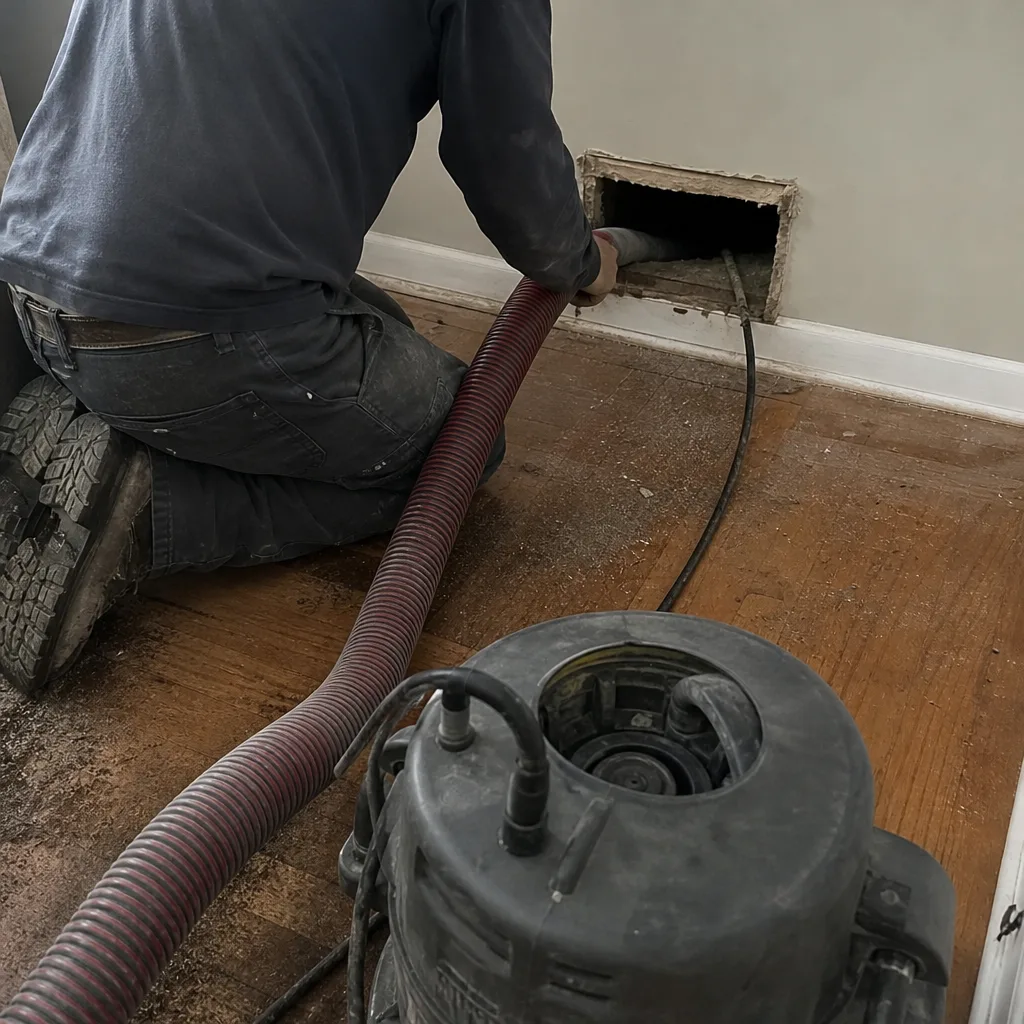 Before
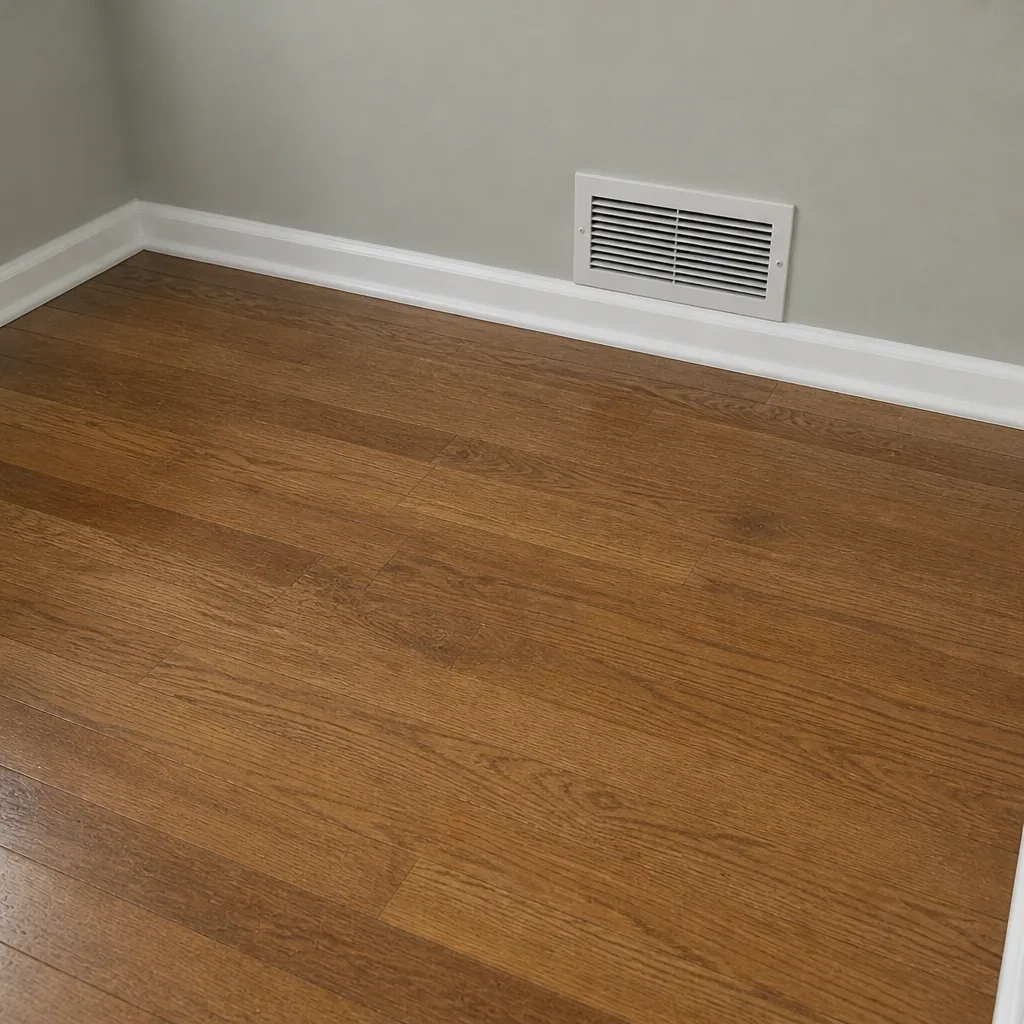 After
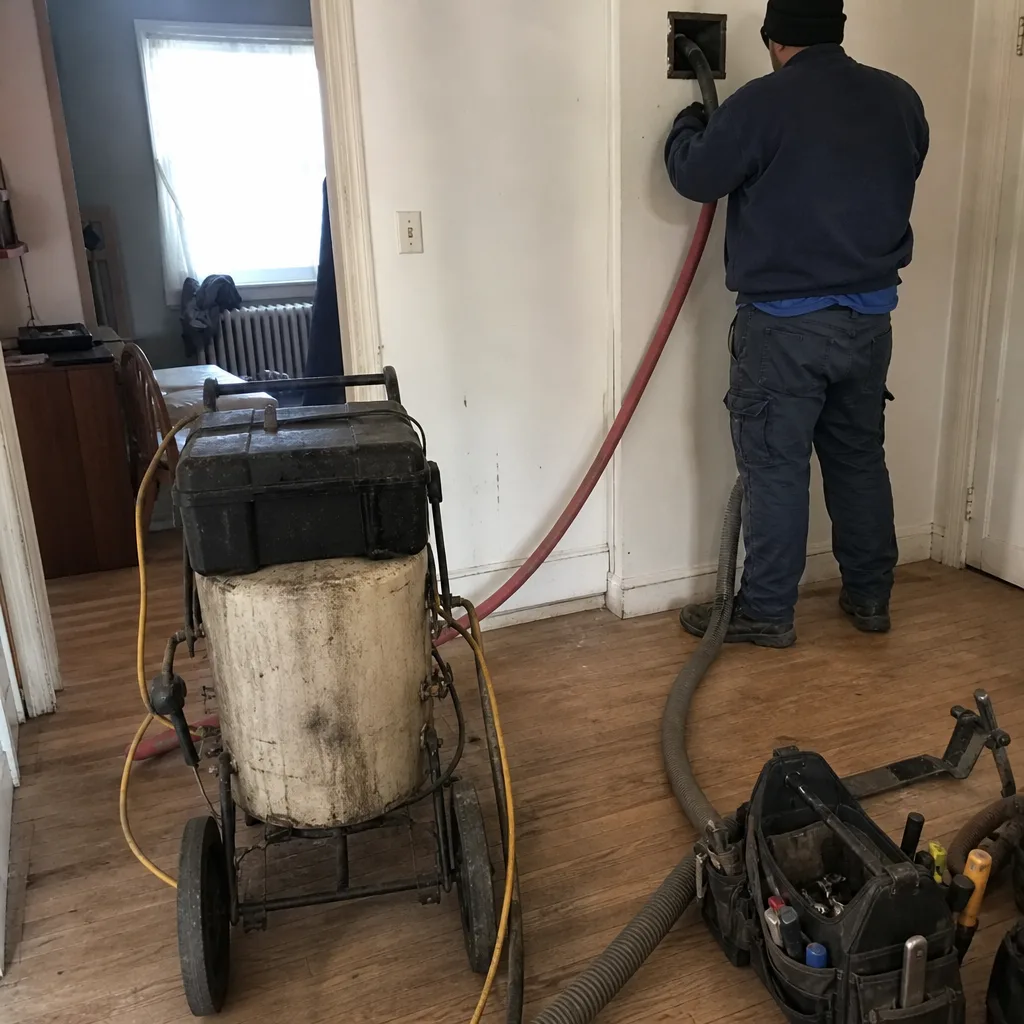 Before
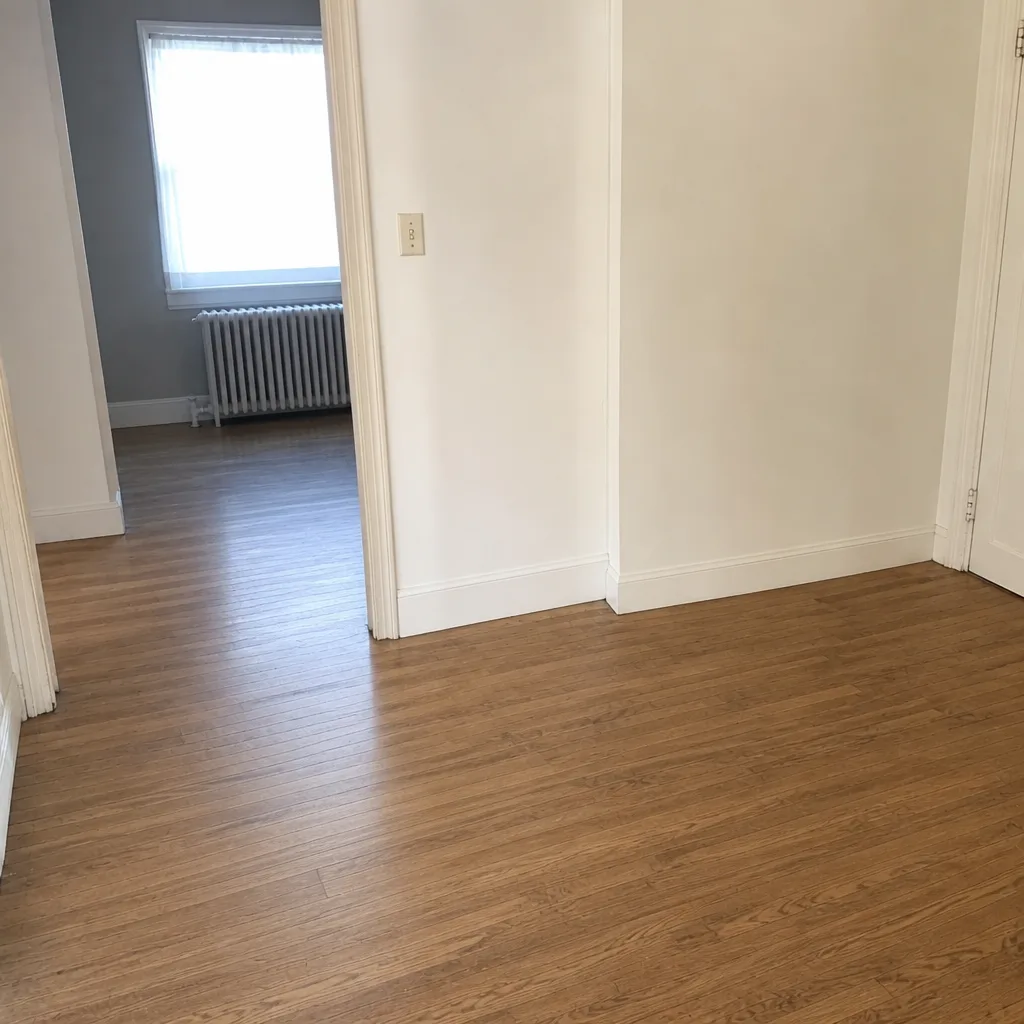 After
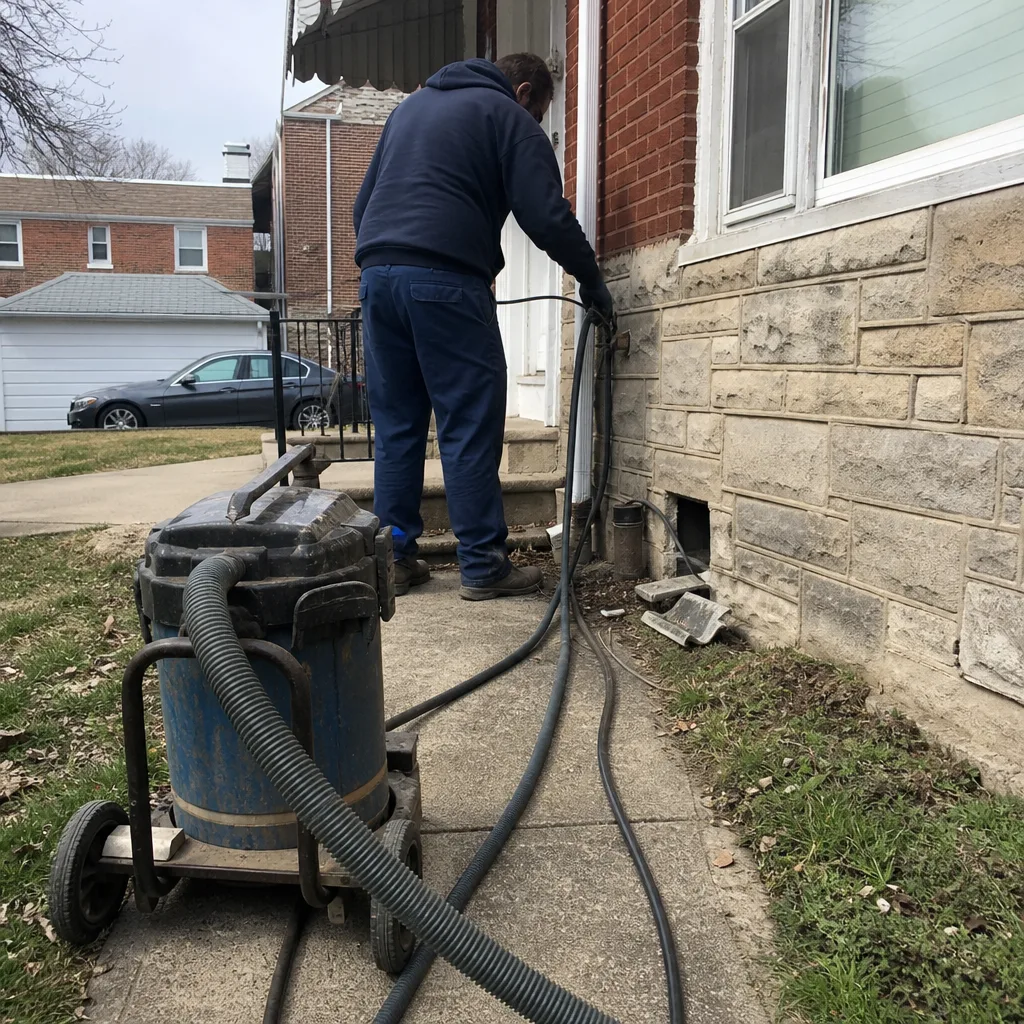 Before
 After
When to Call a Professional
Call us when the question stops being “how do I clean the grille” and becomes “what’s inside the ducts.” That’s when you’ve seen visible debris or dark residue at the register, when a musty smell cycles on with the heat or air conditioning, when your bill has crept up without an equipment change, when you’ve finished a renovation, or when you’ve moved into a Torresdale home and don’t know the duct condition. If a homeowner in the neighborhood is calling us about a suspected mold issue, we treat it as a containment and filtration job, not a cleaning job. Air Duct Cleaning Torresdale offers free estimates in Torresdale. Call (833) 482-6614. We answer 24/7. Fast dispatch from 7am to 7pm, Sunday through Friday.
Frequently Asked Questions
Pricing is set per job by the written estimate, because duct systems vary widely in size, accessibility, and condition. A small rowhouse system and a larger single-family home on the same street can be a genuinely different job. The estimate is free, and you’ll get a flat price for the whole system agreed before work begins, with before-and-after photos of your own ducts. Call (833) 482-6614 for an exact quote, since estimates are free.
No. A shop vac cannot create the system-wide negative pressure required to pull debris toward a collection point, and the most common outcome is pushing debris deeper into the trunk or plenum. What you can do is change the filter on schedule, clean the register grilles, and inspect the returns. Those are the parts a homeowner owns.
Because they’re usually quoting a different job. A low quote often covers a single pass with a shop vac or a brush, no plenum access, and no documentation. Professional cleaning uses Rotobrush or Nikro rotary equipment under negative pressure, accesses the plenum, and photographs the work. Ask what equipment and process a quote includes before you compare dollars.
Before-and-after photos of your own ducts, taken at the registers and at the access panels. If a contractor can’t produce them, you’re relying on a verbal description. When we finish a job, you’re looking at your own ductwork, not a stock image.
If your ducts were professionally cleaned recently and you’re maintaining the filter, there’s no need for annual cleaning. Most homes only need attention when the system condition changes: after a renovation, after pest issues, after visible debris or a musty smell appears, or when you’ve moved into a home with unknown duct history. In Torresdale’s older homes, a fresh look is the right first step; cleaning is a judgment call, not a subscription.
Mold requires a different approach than standard cleaning. If there’s visible or suspected mold growth, the work needs containment-level air filtration equipment, sanitizing, and likely duct sealing to address the source of the moisture. We carry Abatement Technologies air filtration equipment for that class of job, and Honeywell and Aprilaire products for the whole-home air quality side. Call (833) 482-6614 to discuss what a mold-suspect job looks like for your home, and we’ll give you a straight assessment before any work starts.
The Bottom Line
The honest line in this trade is air pressure. You can maintain the parts of your system that face the room, which means filters, register grilles, return inspection, and a phone camera down the run. You can’t clean the trunk lines, plenum, or branch runs without negative-pressure equipment and access panels. A shop vac improves the appearance of the grille and worsens the gut of the system. Where you’re maintaining the system and the filter, keep doing that; it’s not wasted effort. Where you’ve seen debris, smelled mustiness, or your system is underperforming, get a professional assessment and a flat written price before you decide. Air quality isn’t a single problem; it’s a system, and the right equipment for your specific situation is what makes the cleaning count. Call (833) 482-6614. We answer 24/7. Fast dispatch from 7am to 7pm, Sunday through Friday.
Written by the team at Air Duct Cleaning Torresdale.